 Ice Breaker Games
 M&M Game
Pick colored candies where each color means a different sharing topic - red is favorite memory, blue is hidden talent. Makes sharing feel playful instead of forced.
Group Size:
5-25 people
Duration:
10-15 minutes
Difficulty:
Easy
How to Play:
- 1
Get a bag of M&Ms, Skittles, or colored game pieces. You need at least 5 different colors
- 2
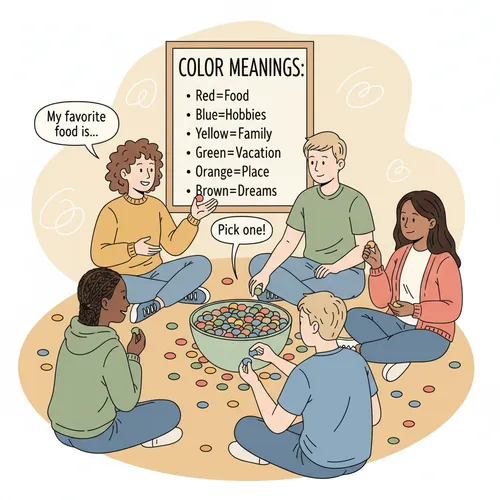
Assign each color to a topic: Red = favorite memory, Blue = hidden talent, Green = dream job, Yellow = biggest fear, Orange = fun fact
- 3
Pass around the bag and let each person take 3-5 pieces. Tell them not to eat yet
- 4
Go around the circle. For each piece they took, they share something based on that color's topic
- 5
After sharing, they can eat their candy or keep their game piece
M&M Game transforms awkward introductions into playful storytelling. Pass around a bag of colorful candies—each color assigned to a different topic. Red means share a favorite memory.
Blue means reveal a hidden talent. The trick: don’t tell people what the colors mean until after they’ve picked. The randomness removes the anxiety of choosing what to reveal.
Someone who grabbed three reds suddenly has to share three memories, while the person with all greens talks about dream jobs. People open up more when sharing feels like luck rather than performance.
The candy gives everyone something to do with their hands, and eating it afterward provides a natural reward. Works perfectly for groups who barely know each other.
Best For:
Breaking the ice with new groups, getting deeper conversations started, making sharing feel less scary, learning unexpected things about people A friendly ice breaker game for teams and groups.
Pro Tips
-
Don't tell people what the colors mean before they pick - adds an element of surprise
-
Keep topics light enough that everyone feels comfortable. Save heavy topics for later
-
If someone gets the same color multiple times, they share different things for that topic
-
For dietary restrictions, use colored paper squares or poker chips instead of candy
-
Model vulnerability by going first and sharing something real, not surface-level
Variations
-
Numbers game: Instead of colors, people take any number of candies. That's how many facts they share total
-
Question bowl: Write questions on slips matching candy colors, people draw matching questions
-
Speed version: Set 30-second timer per color, keeps energy high
-
Team building: Assign colors to work-related topics like 'project you're proud of' or 'skill you want to develop'
FAQ
- Why does M&M Game work so well for reluctant sharers?
- The randomness removes the pressure of choosing what to reveal. You share based on luck, not decision. This ice breaker game makes vulnerability feel like a game rather than a spotlight moment.
- What if someone has dietary restrictions for M&M Game?
- Use colored paper squares, poker chips, or small game pieces instead of candy. The game works identically—the candy is just the fun hook, not the essential mechanic.
- Should I tell people the color meanings before they pick in M&M Game?
- No. The surprise element adds fun and spontaneity. People naturally share more authentically when they don't overthink their choices. Wait until everyone has picked.
- How many candies should each person take in M&M Game?
- Recommend 3-5 pieces to keep sharing manageable. Too many pieces makes the activity drag. For larger groups, use fewer pieces per person.
- What topics work best for M&M Game colors?
- Start light: favorite memory, hidden talent, dream vacation, fun fact. Avoid heavy topics like fears or regrets in new groups. This ice breaker game works best when topics feel safe but interesting.
Related Games
Interview Partner
Interview your partner for a few minutes, then introduce them to the group. Takes pressure off shy people since they're talking about someone else, not themselves.
Conversation Starters
Small groups draw question cards and take turns answering - 'Tell me about a risk you took' or 'What's your hidden talent?' Gives structure to conversations so they naturally go deeper.
Line Up Game
Line up by height, birthday, or name without talking at all. Shows who naturally leads and forces creative nonverbal communication.
What's Different
One team studies the other, turns around, and the other team makes small changes like rolling up sleeves or swapping positions. Tests how observant people really are.
Build Stronger Team Connections
Break the ice and foster closer relationships with our curated games.
Games