 Ice Breaker Games
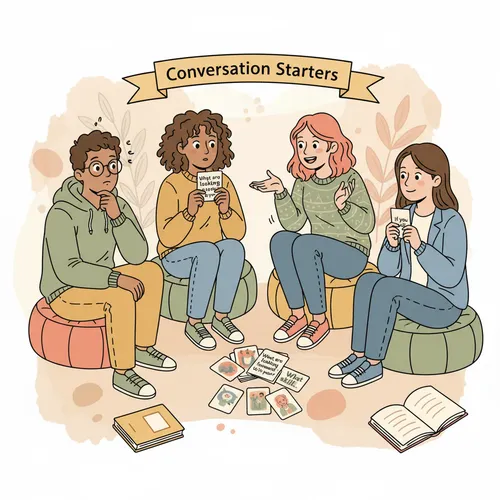
 Conversation Starters
Small groups draw question cards and take turns answering - 'Tell me about a risk you took' or 'What's your hidden talent?' Gives structure to conversations so they naturally go deeper.
Group Size:
6-30 people
Duration:
10-15 minutes
Difficulty:
Easy
How to Play:
- 1
Prepare 20-50 question cards with interesting prompts. Write one question per card or use pre-made sets
- 2
Divide people into small groups of 3-5. Give each group a stack of cards face-down
- 3
Each person takes turns drawing a card and answering the question. No pressure to share if they're uncomfortable
- 4
After someone answers, others in the group can ask follow-up questions or share their own similar experiences
- 5
Continue for 10-15 minutes or until energy starts to fade. Groups can draw as many cards as time allows
Conversation Starters replaces awkward small talk with meaningful exchange through the power of good questions. Divide into small groups, give each a stack of question cards, and watch conversations transform. Structure creates safety that free-form chatting can’t provide.
When everyone knows questions are coming and turns rotate, anxiety about what to say disappears. Someone draws a card: “Tell me about a risk you took. ” Suddenly the group is hearing about career changes, travel adventures, relationship leaps.
The next card asks about hidden talents, and a quiet colleague reveals they play competitive chess. Good questions do the heavy lifting—they give permission to share things people rarely discuss in polite conversation. Keep groups small enough that everyone speaks.
Best For:
Deep conversations in new groups, moving beyond small talk, team bonding, revealing personality and values, creating psychological safety A friendly ice breaker game for teams and groups.
Pro Tips
-
Mix question types: fun ('What's your hidden talent?'), reflective ('What's a risk you took?'), values-based ('What matters most to you?')
-
Avoid yes/no questions. Use 'Tell me about a time...' or 'What's your opinion on...'
-
Create a 'pass' rule so no one feels forced to answer something too personal
-
Keep groups small - 3-5 people max. Larger groups make people less likely to open up
-
For remote teams, use a random number generator or digital card deck in breakout rooms
Variations
-
Speed round: Set 2-minute timer per card, rapid-fire answers, keeps momentum
-
Agree/disagree: Cards have opinion statements, people share where they stand and why
-
Story version: Questions specifically ask for stories, not just facts ('Tell about a time you failed')
-
This or that: Each card has two choices, people pick and explain why
FAQ
- Why do Conversation Starters work better than free-form chatting?
- Structure creates safety. When everyone knows questions are coming and everyone takes turns, there's less anxiety about what to say. This ice breaker game gives people permission to share without feeling put on the spot.
- What types of questions work best for Conversation Starters?
- Mix fun, reflective, and values-based questions. Avoid yes/no answers—use open prompts like 'Tell me about a time...' or 'What's your opinion on...' The best questions reveal personality without being too invasive.
- What if someone draws a question they don't want to answer in Conversation Starters?
- Always include a 'pass' rule. People can skip questions that feel too personal and draw a new card. This ice breaker game only works when everyone feels safe to participate at their comfort level.
- How many cards does each group need for Conversation Starters?
- Prepare 10-15 cards per group for a 15-minute session. Groups can recycle cards if they run out. Quality matters more than quantity—a few great questions beat dozens of boring ones.
- Can Conversation Starters work for remote teams?
- Perfectly. Use breakout rooms with digital card decks or numbered questions in a shared document. The structured format actually helps remote teams since it prevents the awkward silences that plague video calls.
Related Games
Interview Partner
Interview your partner for a few minutes, then introduce them to the group. Takes pressure off shy people since they're talking about someone else, not themselves.
Line Up Game
Line up by height, birthday, or name without talking at all. Shows who naturally leads and forces creative nonverbal communication.
What's Different
One team studies the other, turns around, and the other team makes small changes like rolling up sleeves or swapping positions. Tests how observant people really are.
M&M Game
Pick colored candies where each color means a different sharing topic - red is favorite memory, blue is hidden talent. Makes sharing feel playful instead of forced.
Build Stronger Team Connections
Break the ice and foster closer relationships with our curated games.
Games