 Ice Breaker Games
 Interview Partner
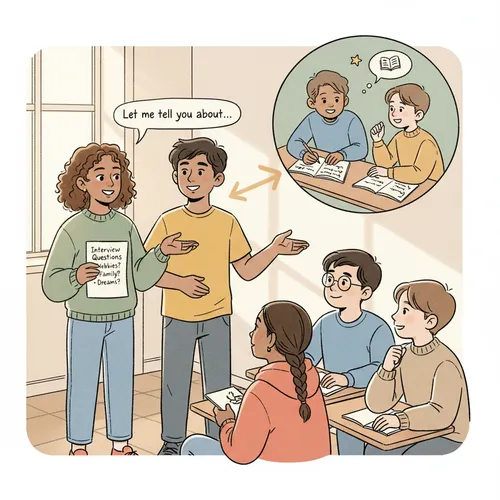
Interview your partner for a few minutes, then introduce them to the group. Takes pressure off shy people since they're talking about someone else, not themselves.
Group Size:
6-30 people
Duration:
10-15 minutes
Difficulty:
Easy
How to Play:
- 1
Divide everyone into pairs. Try to pair people who don't know each other well
- 2
Give them a list of 3-5 interview questions, or let them come up with their own
- 3
Partners interview each other for 3-5 minutes per person. They take notes if needed
- 4
Bring everyone back together. Each person introduces their partner to the whole group in 30-60 seconds
- 5
The twist: They can't just read facts. They have to tell a mini-story about what makes their partner interesting
Interview Partner flips the usual introduction anxiety on its head. Instead of dreading your own turn to speak, you’re focused on learning about someone else. Pair people who don’t know each other well, give them thoughtful interview questions, and watch what happens.
The shift from self-promotion to storytelling changes everything. Students who normally stumble through “Um, I like reading” become engaged narrators: “My partner spent last summer learning sign language because her neighbor is deaf.” The key is better questions—skip demographics and ask about proud moments, interesting skills, or times they took risks.
Partners take notes, then introduce each other in 30-60 seconds. The listening practice alone makes this valuable.
Best For:
First day of class, new team formation, building empathy and listening skills, learning names, creating personal connections A friendly ice breaker game for teams and groups.
Pro Tips
-
Provide specific questions rather than 'tell me about yourself' - you'll get better stories
-
Good questions: What's something you're proud of? What's a skill you want to learn? Tell me about a time you took a risk
-
Encourage active listening. Partners should maintain eye contact and ask follow-up questions
-
Model a good introduction first so students know what you're looking for
-
For shy students, let them write bullet points before presenting
Variations
-
Speed dating version: 2 minutes per interview, rotate partners multiple times, introduce just one partner at the end
-
Three truths format: Partner shares three interesting facts, all true, then others guess which sounds most surprising
-
Video introduction: Partners record a 30-second phone video introducing each other
-
Question cards: Write questions on cards, partners draw 3 cards randomly to answer
FAQ
- Why does Interview Partner work better than regular introductions?
- Talking about someone else feels easier than talking about yourself. Shy students who freeze during self-introductions become animated storytellers when describing their partner. This ice breaker game removes the self-consciousness barrier.
- What questions work best for Interview Partner?
- Ask about proud moments, skills they want to learn, or interesting experiences. Avoid boring demographic questions like 'What's your major?' The quality of introductions depends entirely on the quality of questions.
- How do I help shy students feel comfortable during Interview Partner?
- Let them write notes during the interview and use them during introduction. Model vulnerability by going first yourself. This ice breaker game naturally reduces pressure since they're talking about someone else.
- Can Interview Partner work for large groups?
- Yes, but limit introductions to 30 seconds each. With 30 people, that's still 15 minutes of introductions. Consider having partners introduce each other in smaller breakout groups first.
- Should partners take notes during Interview Partner interviews?
- Yes, absolutely. Brief notes help them remember details for the introduction and show their partner they're actively engaged. Note-taking also reduces anxiety about forgetting important information.
Related Games
Conversation Starters
Small groups draw question cards and take turns answering - 'Tell me about a risk you took' or 'What's your hidden talent?' Gives structure to conversations so they naturally go deeper.
Line Up Game
Line up by height, birthday, or name without talking at all. Shows who naturally leads and forces creative nonverbal communication.
What's Different
One team studies the other, turns around, and the other team makes small changes like rolling up sleeves or swapping positions. Tests how observant people really are.
M&M Game
Pick colored candies where each color means a different sharing topic - red is favorite memory, blue is hidden talent. Makes sharing feel playful instead of forced.
Build Stronger Team Connections
Break the ice and foster closer relationships with our curated games.
Games