 Ice Breaker Games
 Agree or Disagree
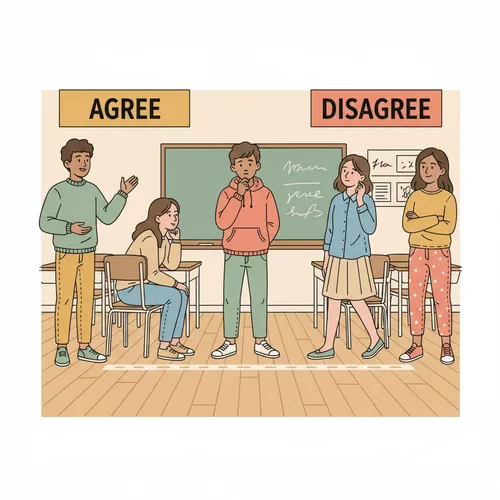
Call out a statement, students walk to 'agree' or 'disagree' sides of the room. Makes opinions visible and helps shy students speak up when they see others on their side.
Group Size:
10-30 people
Duration:
10-15 minutes
Difficulty:
Easy
How to Play:
- 1
Set up two signs in your room - one says 'Agree' and one says 'Disagree'. You can use tape to mark a middle spot too
- 2
Have all students stand in the middle of the room
- 3
Read a statement out loud. Students walk to the side that matches their opinion
- 4
Pick a few students from each side to explain their thinking. Your job is to listen, not talk
- 5
Move on to the next statement. Do 3-5 statements total
Agree or Disagree turns abstract opinions into physical positions that everyone can see. Read a statement—pineapple belongs on pizza, homework helps learning, morning people have it easier—and watch students vote with their feet. The magic happens after they move, when you ask them to explain why.
The quiet kid who never volunteers? She walked to “disagree” and now has three people standing next to her who feel the same way. That physical solidarity makes speaking up feel safer.
The class clown who dominates discussions? He’s one voice among many on his side now, not the center of attention. You’ll discover opinions you never knew existed in your classroom.
Best For:
Classroom icebreakers, exploring different perspectives, getting students comfortable sharing opinions, movement breaks. An ice breaker game that makes invisible opinions visible through physical positioning.
Pro Tips
-
Start with fun, low-stakes statements (like 'Pizza is okay for breakfast') to build trust
-
Mix in serious statements later to explore values and deeper thinking
-
Don't do more than 5 questions - keep the energy high and stop while it's still fun
-
You're the facilitator, not the debater. Let students do all the talking
-
If someone stands in the middle, that's okay - acknowledge that some issues are complex
Variations
-
Add a 'Strongly Agree' and 'Strongly Disagree' option for more nuance
-
Silent version: Students move but don't speak. Read the 'body language' of the room
-
Small groups: Instead of picking individuals, have each side huddle and send one spokesperson
-
Write it out: Students write their reasons on sticky notes before discussing
FAQ
- What makes Agree or Disagree work for shy students?
- Moving first, talking second. Students commit to a position physically before anyone asks them to speak. Seeing others on their side gives them confidence. This ice breaker game removes the pressure of being the only person with an opinion.
- How many statements should I use in Agree or Disagree?
- 3-5 statements maximum. More than that drains energy. Start with a fun one, build to something meaningful, and end while students still want more.
- What if all students choose the same side?
- This is valuable data. Ask why everyone agrees and explore if anyone had doubts before choosing. Sometimes consensus reveals shared values worth discussing.
- How do I handle controversial topics in Agree or Disagree?
- Start with fun, low-stakes statements to build trust before introducing more serious topics. Emphasize respect for all opinions. The middle position exists for complex issues.
- What age group is Agree or Disagree best for?
- Middle and high school students respond best to this ice breaker game. The movement breaks up sitting fatigue, and the debate format appeals to teens developing their own opinions.
Related Games
Boss Battle
Pick a side in a fun debate like 'Mermaid vs Shark', write your best argument on a sticky note, and post it on the board. Gets quiet students participating without scary public speaking.
Either Or
Call out two options and students move to different sides of the room to show their choice. Visually shows who shares your preferences and gets bodies moving.
Line Up Game
Line up by height, birthday, or name without talking at all. Shows who naturally leads and forces creative nonverbal communication.
What's Different
One team studies the other, turns around, and the other team makes small changes like rolling up sleeves or swapping positions. Tests how observant people really are.
Build Stronger Team Connections
Break the ice and foster closer relationships with our curated games.
Games