 Ice Breaker Games
 Boss Battle
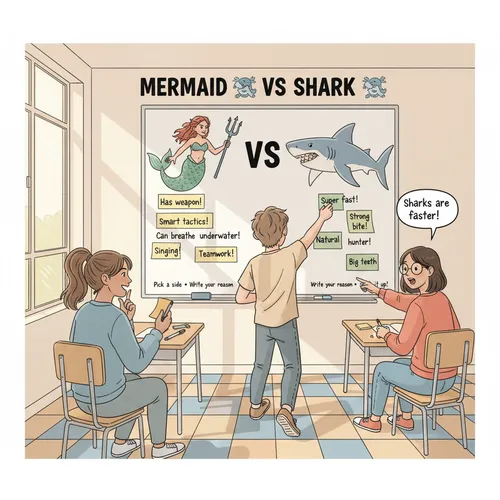
Pick a side in a fun debate like 'Mermaid vs Shark', write your best argument on a sticky note, and post it on the board. Gets quiet students participating without scary public speaking.
Group Size:
10-30 people
Duration:
10-15 minutes
Difficulty:
Easy
How to Play:
- 1
Write two fun opponents on the board (like 'Mermaid with trident vs. Supersonic shark')
- 2
Students pick which side they think would win
- 3
Each person writes their best reason on a sticky note—one note, one reason, keep it short
- 4
Everyone sticks their notes on the board under their chosen side
- 5
Read some of the best reasons out loud and discuss counterarguments
Boss Battle turns debate into a low-stakes game that shy students actually want to play. Write two fun opponents on the board—Mermaid with trident versus Supersonic shark, for example—and watch students pick sides instantly. The magic happens when they write arguments on sticky notes instead of speaking out loud.
The quiet kid in the back who never raises her hand? She writes three reasons why the shark’s speed beats everything. The class clown who usually derails discussions?
He’s focused because this feels like a game, not a lesson. When you read the best arguments out loud, students hear their ideas without the terror of public speaking.
Best For:
Classroom icebreakers, debate practice, critical thinking warm-ups, and engaging shy students. An ice breaker game that gets everyone participating through writing instead of speaking.
Pro Tips
-
Pick funny or interesting opponents that students actually care about
-
Make the rule crystal clear: one sticky note, one reason, no speeches
-
After reading reasons, ask follow-up questions to dig deeper into the logic
-
Use before teaching argumentative writing to show what good reasons look like
Variations
-
Subject Battles: Which scientist would win? Which historical figure?
-
Visual Version: Draw or show pictures of opponents for English learners
-
Team Battle: Groups create 3-5 coordinated argument sticky notes together
-
Silent Battle: No discussion until all notes are up, then analyze together
FAQ
- What makes a good Boss Battle matchup?
- Choose opponents that are evenly matched and interesting. Avoid obvious winners. 'Mermaid with trident vs Supersonic shark' works because both sides can argue.
- How do I keep Boss Battle focused without long speeches?
- Enforce the one-sticky-note rule strictly. This ice breaker game works because writing is low-pressure—don't ruin it by forcing people to talk.
- Can Boss Battle teach actual content?
- Yes—create subject-specific battles like historical figures or literary characters. 'Napoleon vs Caesar' reviews history while building argument skills.
- Why does Boss Battle work for shy students?
- No public speaking required. Students write their argument and stick it up—their idea gets heard without them having to say a word out loud.
- What age group is Boss Battle best for?
- Middle and high school students love this ice breaker game. The debate format and creative matchups keep teens engaged where lecture-style activities would lose them.
Related Games
Agree or Disagree
Call out a statement, students walk to 'agree' or 'disagree' sides of the room. Makes opinions visible and helps shy students speak up when they see others on their side.
Ball Talk
Pass a ball around the circle - only the person holding it can talk. Gives shy students clear permission to speak and prevents interruptions.
Line Up Game
Line up by height, birthday, or name without talking at all. Shows who naturally leads and forces creative nonverbal communication.
M&M Game
Pick colored candies where each color means a different sharing topic - red is favorite memory, blue is hidden talent. Makes sharing feel playful instead of forced.
Build Stronger Team Connections
Break the ice and foster closer relationships with our curated games.
Games