 Ice Breaker Games
 Ball Talk
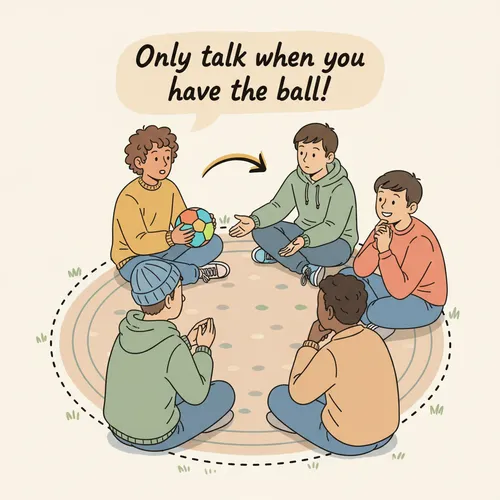
Pass a ball around the circle - only the person holding it can talk. Gives shy students clear permission to speak and prevents interruptions.
Group Size:
8-25 people
Duration:
10-15 minutes
Difficulty:
Easy
How to Play:
- 1
Stand or sit in a circle. Give yourself 60 seconds to get organized
- 2
Set two clear rules: (1) Only one person speaks at a time. Interrupting means you're out. (2) No ball = no talking
- 3
Pass the ball. When you have it, give a short answer - anywhere from one word to one sentence
- 4
Use simple prompts: What's different this year? What changed for you last year? What time did you leave home today?
- 5
Keep it moving. The ball should never stop for more than 5 seconds
Ball Talk solves the classroom speaking problem with one simple object. The person holding the ball talks. Everyone else listens.
That’s the entire game, and it works because the rule is impossible to misunderstand. The quiet kid who never volunteers? Now she has a physical object that says, “It’s your turn to speak.”
The interrupter who dominates every discussion? He has to wait for the ball like everyone else.
Teachers report that students who haven’t spoken all semester suddenly participate when the ball lands in their hands. The visual permission cuts through social anxiety fast—and listening improves, too.
Best For:
Structured turn-taking, helping shy students participate, practicing listening skills, quick check-ins. An ice breaker game that creates clear speaking permission through a simple visual cue.
Pro Tips
-
The ball = speaking permission. This visual cue helps everyone
-
Short answers only - no speeches. If someone talks too long, remind them to pass the ball
-
Tight on space? Form a line and pass the ball down the row instead
-
Change directions randomly to keep people alert
-
If someone passes without speaking, that's okay - just move to the next person
Variations
-
Speed round: Ball must be passed within 3 seconds of receiving it
-
Story ball: Each person adds one sentence to build a collaborative story
-
Question ball: Person with ball asks the next person a question before passing
-
Compliment ball: Say something nice about the person you're passing to
FAQ
- Why does Ball Talk work for shy students?
- The ball creates explicit permission to speak. Shy students don't have to fight for airtime or wonder if it's their turn—the ball tells them. This ice breaker game removes the ambiguity that makes speaking up feel risky.
- What type of ball should I use for Ball Talk?
- Use a soft, easy-to-catch ball like a foam ball, beach ball, or stuffed animal. Avoid hard balls that might cause injuries or make students anxious about catching.
- What if someone won't pass the ball?
- Set a 5-second time limit from the start. Gently remind them to keep it moving. The structure is the point—don't let anyone turn this into a monologue opportunity.
- Can Ball Talk work in limited space?
- Yes, form a line instead of a circle and pass the ball down the row. This ice breaker game adapts to tight classrooms and even seated arrangements.
- What prompts work best for Ball Talk?
- Simple, answerable questions everyone can respond to quickly: What did you eat for breakfast? What's one word for how you're feeling? Easy questions keep the ball moving and energy high.
Related Games
Boss Battle
Pick a side in a fun debate like 'Mermaid vs Shark', write your best argument on a sticky note, and post it on the board. Gets quiet students participating without scary public speaking.
Line Up Game
Line up by height, birthday, or name without talking at all. Shows who naturally leads and forces creative nonverbal communication.
Mingle Game
Play music while students walk around, then call out a number and they scramble to form groups of that size. Gets energy up and randomly mixes people who wouldn't normally interact.
Either Or
Call out two options and students move to different sides of the room to show their choice. Visually shows who shares your preferences and gets bodies moving.
Build Stronger Team Connections
Break the ice and foster closer relationships with our curated games.
Games