 Ice Breaker Games
 Either Or
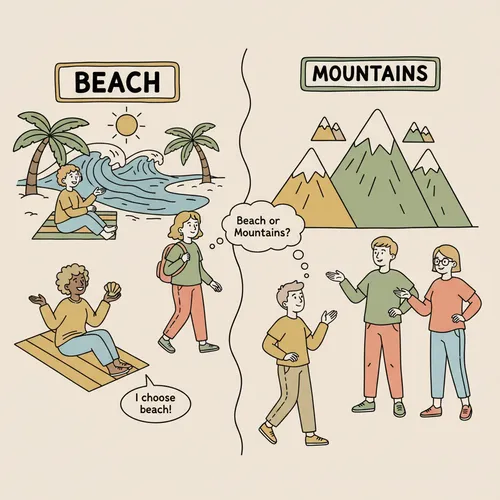
Call out two options and students move to different sides of the room to show their choice. Visually shows who shares your preferences and gets bodies moving.
Group Size:
10-30 people
Duration:
5-10 minutes
Difficulty:
Easy
How to Play:
- 1
Designate left side of room as Option A and right side as Option B. Mark with signs or tape if helpful
- 2
Have everyone start in the middle of the room
- 3
Call out an either/or choice (Coffee or tea? Beach or mountains? Early bird or night owl?)
- 4
Students quickly move to the side that represents their choice
- 5
Optional: Pick 1-2 people from each side to briefly explain why they chose that. Keep it quick
- 6
Everyone returns to center. Repeat with 5-8 different choices
Either Or
The simplest format that still works magic. Something about physically moving to show your choice makes it more engaging than just raising hands. Plus, you instantly see who shares your preferences - it’s a visual way to find commonalities.
Perfect when you need a quick energy shift or want to segue into a topic by showing the range of opinions in the room. Five minutes and everyone’s alert again.
Best For:
Quick energizer with movement, seeing group preferences visually, sparking conversations about differences, getting shy students moving, transition activity
Pro Tips
-
Start with easy, low-stakes choices (pizza or burgers) to get people comfortable moving
-
Mix in some surprising or thoughtful choices (work alone or in team? planned or spontaneous?)
-
Speed matters - don't let people overthink. Call out the choice and give 5 seconds to move
-
You can stand in the middle if you truly can't choose, but encourage people to pick a side
-
End with a choice that connects to your next activity or lesson topic
Variations
-
Four corners: Use all four corners for four different options instead of just two
-
Silent version: No explaining why, just observe where people stand and notice patterns
-
Intensity scale: Middle is neutral, far edges are strong feelings, students position themselves on the spectrum
-
Rapid fire: Do 10 quick choices in 2 minutes, no discussion, just constant movement
FAQ
- What if everyone chooses the same side?
- That's interesting data. Ask if anyone almost chose differently and why everyone agrees. Then move to a more divisive question.
- Can people stand in the middle?
- Decide beforehand. Some facilitators require choosing a side to encourage decision-making, others allow middle for truly neutral topics.
- How many choices should I prepare?
- Prepare 10-12 questions and use 5-8 of them depending on time and energy levels.
Related Games
Line Up Game
Line up by height, birthday, or name without talking at all. Shows who naturally leads and forces creative nonverbal communication.
What's Different
One team studies the other, turns around, and the other team makes small changes like rolling up sleeves or swapping positions. Tests how observant people really are.
Interview Partner
Interview your partner for a few minutes, then introduce them to the group. Takes pressure off shy people since they're talking about someone else, not themselves.
Conversation Starters
Small groups draw question cards and take turns answering - 'Tell me about a risk you took' or 'What's your hidden talent?' Gives structure to conversations so they naturally go deeper.
Build Stronger Team Connections
Break the ice and foster closer relationships with our curated games.
Games