 Ice Breaker Games
 Hot Seat
One player sits facing away from the screen while their team describes the word shown without using forbidden terms. Combines competition with teamwork to get everyone energized and focused.
Group Size:
10-30 people
Duration:
15-20 minutes
Difficulty:
Easy
How to Play:
- 1
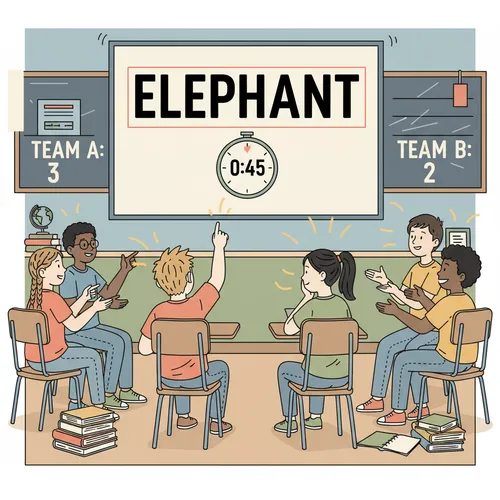
Split into two teams. One person from each team sits in the 'hot seat' facing away from the screen
- 2
Display a word on the screen. The team describes it without using forbidden words
- 3
Set a timer (usually 30-60 seconds per word). Team scores a point when their player guesses correctly
- 4
Rotate who's in the hot seat. Keep score. First team to X points wins
- 5
Teacher tip: Keep a pre-made hot seat slide deck ready for emergency activities
Hot Seat is the emergency activity that works every time. Split into teams, put one person in the hot seat facing away from the screen, and display a word. Their team has 30-60 seconds to describe it without using forbidden terms.
The timer transforms everything. Suddenly everyone is leaning forward, talking over each other, trying to find the perfect description before time runs out. The quiet student becomes the star when they nail a clever hint.
The competitive kid finally has an outlet that helps the team instead of disrupting class. You’ll watch group dynamics shift as students who never talk to each other suddenly collaborate urgently. Keep a pre-made slide deck ready.
Best For:
High-energy icebreakers, vocabulary practice, review games, building team collaboration, filling unexpected free time. An ice breaker game that combines competition with teamwork for instant engagement.
Pro Tips
-
Competition + teamwork = instant engagement. This one never fails
-
Use it for fun (random words) or learning (vocabulary, historical figures, science terms)
-
Have a pre-made deck ready. This is your emergency 'class just ended early' activity
-
Encourage creative descriptions - no acting out unless you allow it
-
Adjust time based on difficulty: easy words get 30 seconds, hard ones get 60
Variations
-
Literature mode: Characters, plot points, themes from your current book
-
History mode: Historical figures, events, time periods
-
Science mode: Elements, processes, scientific terms
-
Pop culture mode: Movies, songs, celebrities for connection building
FAQ
- Why does Hot Seat work for tired or distracted groups?
- Competition creates urgency. The timer adds pressure. Teammates depend on each other. This ice breaker game turns passive observers into active participants within seconds because winning feels possible.
- How many words should each Hot Seat round include?
- 5-10 words per round keeps energy high. Too many words drains the excitement. You want students leaving wanting more, not exhausted.
- What if teams argue about forbidden words during Hot Seat?
- Decide forbidden words in advance and display them with each word. Be the neutral judge. If someone uses a forbidden word, the team loses that turn—no arguments.
- Can Hot Seat work virtually?
- Yes, use screen share for the word display. The guesser turns off their camera or looks away. This ice breaker game works great on Zoom or similar platforms.
- How do I make a Hot Seat word deck?
- Create slides in PowerPoint or Google Slides with one word per slide plus 2-3 forbidden words listed below. Color-code by difficulty or category for easy selection.
Related Games
Line Up Game
Line up by height, birthday, or name without talking at all. Shows who naturally leads and forces creative nonverbal communication.
What's Different
One team studies the other, turns around, and the other team makes small changes like rolling up sleeves or swapping positions. Tests how observant people really are.
Interview Partner
Interview your partner for a few minutes, then introduce them to the group. Takes pressure off shy people since they're talking about someone else, not themselves.
M&M Game
Pick colored candies where each color means a different sharing topic - red is favorite memory, blue is hidden talent. Makes sharing feel playful instead of forced.
Build Stronger Team Connections
Break the ice and foster closer relationships with our curated games.
Games