 Ice Breaker Games
 Low-Prep Icebreakers for Teens: 5 Step-by-Step Activities

Five activities. Minimal prep. Maximum talk. Classroom-tested with teens. Works for middle and high school.
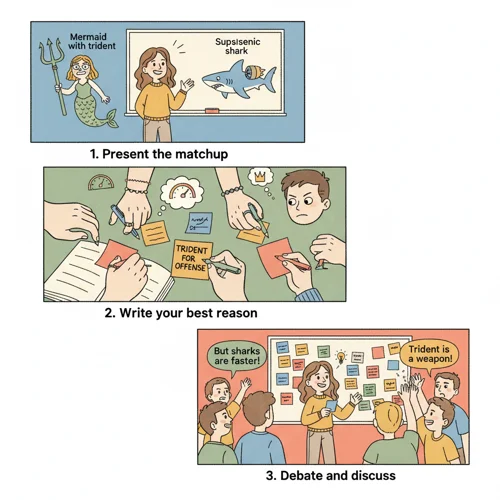
1. Boss Battle
What you need: Board, markers, Post-Its (one per student).
How to run it:
- Write two opponents on the board. (Mermaid with trident vs. supersonic shark.)
- Students pick a side. Write their best reason on a Post-It. No speeches.
- Stick Post-Its on board. Return to seats.
- Read selected reasons aloud. Discuss counterarguments and evidence.
Time: 10-15 minutes
Why it works: Debate without the terror. Introduces argumentative vocabulary naturally.
Variations: Add visuals for ELL students. Use subject-specific prompts (which scientist wins?).
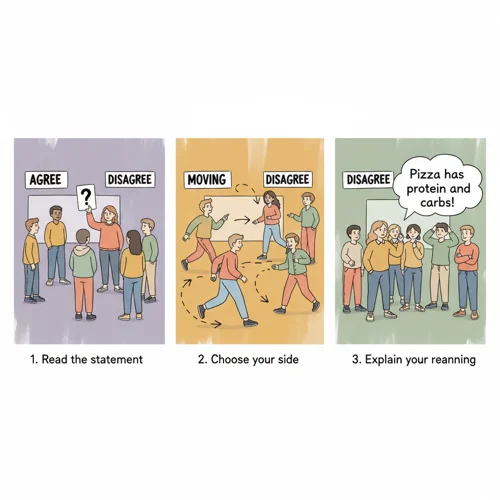
2. Agree or Disagree
What you need: Two signs (Agree, Disagree). Optional: tape to mark middle.
How to run it:
- Students start in the middle.
- Read a statement. Students move to Agree or Disagree.
- Few students from each side explain. You stay quiet.
Sample questions:
- Pizza is acceptable breakfast.
- Pajamas are acceptable school attire.
- Teachers can’t give grades below 50%.
Time: 10-15 minutes
Tips: Max 5 questions per session. Start silly (builds trust). Go serious later (surfaces values).
Why it works: Everyone moves. Everyone speaks. You just watch.
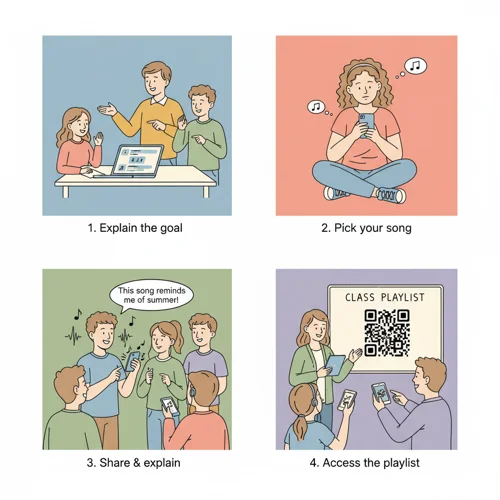
3. Create a Class Playlist
What you need: Laptop or smartphones. Spotify/YouTube account.
How to run it:
- Each student picks one song (15-30 second clip).
- Play clip. Student explains choice in 1-2 sentences.
- You curate the playlist. Check for explicit lyrics.
- Share via QR code or link.
Time: 15-20 minutes
Why it works: Teens love music. Low pressure. Builds connection fast.
Variations: Theme it (study vibes, Friday jams). Tie to lit (pick a song for this character).
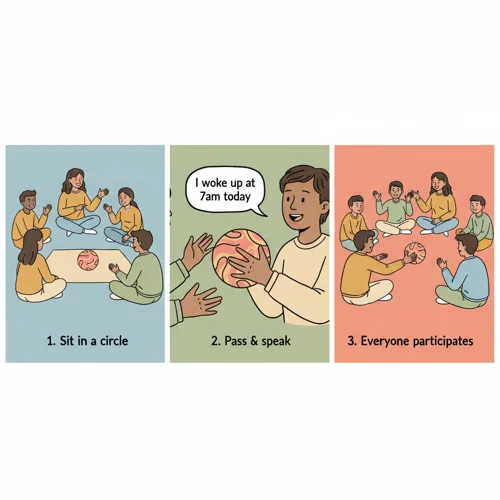
4. Ball Talk (Pass the Ball)
What you need: Soft ball. Chairs in a circle.
How to run it:
- Circle up (60 second challenge).
- Two rules: (1) One speaker at a time. Interrupt = sit out. (2) No ball = no talking.
- Pass the ball. Keep answers short (one word to one sentence).
Sample prompts:
- What’s different this year?
- One thing you changed last year.
- What time did you leave home today?
Time: 10-15 minutes
Why it works: Everyone talks. Ball = turn-taking. Shy students get structure.
Tight space? Pass within rows instead of circle.
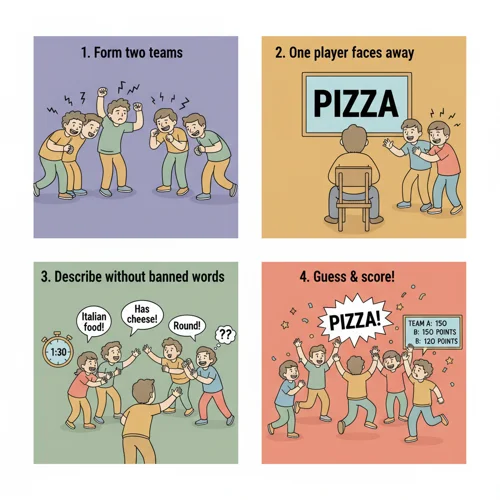
5. Hot Seat
What you need: Word slides, chair, timer.
How to run it:
- Two teams. One player sits in hot seat, back to screen.
- Team describes the word. Can’t use forbidden clues.
- Timer runs. Correct guess = point.
Time: 15-20 minutes
Why it works: Competition + teamwork. Minimal teacher effort. Fun or review—your choice.
Pro tip: Keep Hot Seat slides ready for dead time. Use for vocab, history, lit terms.
Use All Year
Don’t save these for day one. Sprinkle them throughout the year. They build skills: argumentation, listening, collaboration, concise speaking.
Pre-flight checklist:
- Materials ready? Behavior expectations clear?
- Silly prompts (builds rapport) or serious (probes values)?
- Visuals or sentence starters for ELL students?
- End while it’s still fun.
Bottom Line
Try one tomorrow. Watch classroom energy shift. Find ready-made Hot Seat slides and Agree/Disagree questions on teacher resource sites.
Looking for more icebreaker ideas? Check out our other articles: