 Ice Breaker Games
 10 Icebreaker Games for the First Day of Class

Ten simple icebreakers to get students talking from day one. Minimal prep. Maximum engagement. Works for any class size.
Quick Guide
Time: 5-15 minutes per activity.
Safety notes: Check allergies before food games. No running or pushing in movement activities.
Debrief tip: Ask students what they learned about others. Builds listening skills.
Online: Use breakout rooms, polls, or shared slides.
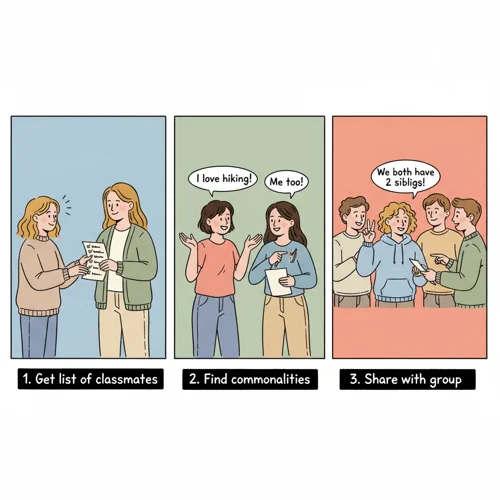
1. Find Something You Have in Common
What you need: Class list for each student.
How to play: Students find one thing in common with everyone on their list. Can’t repeat the same commonality twice.
Time: 10-15 minutes
Why it works: Forces real conversations. No generic “we both like pizza” shortcuts.
2. Line Up
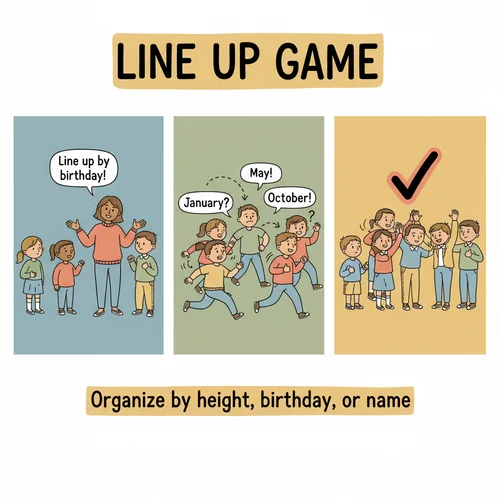
Students organize themselves by height, birthday, or name—without talking.
Fun twist: Pick an animal. Mime it. Line up by animal size.
Time: 5-10 minutes
3. What’s Different?
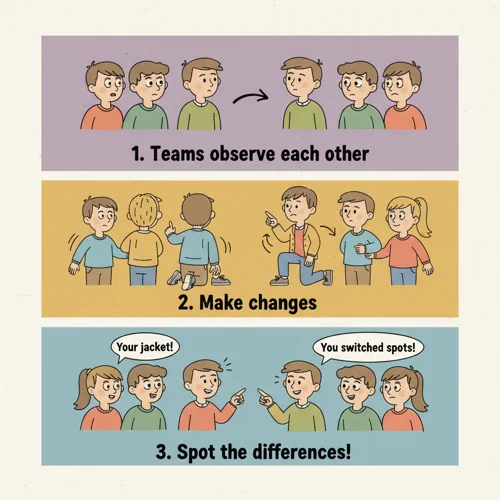
Two teams face each other. Team A turns around. Team B makes changes: swap jackets, untie shoes, switch places. Team A turns back and spots the changes.
Time: 5-10 minutes
Why it works: Zero prep. Instant engagement.
4. Interview a Partner
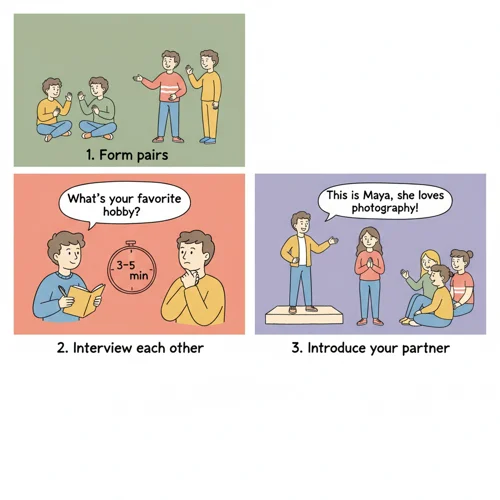
Pairs interview each other for 3-5 minutes. Then introduce your partner to the class as their “hype person.”
Time: 10-15 minutes
Psychic variation: Skip questions. Make positive guesses instead. “You have two brothers.” “You love spaghetti.” Partner confirms or corrects.
Why it works: Students talk about others, not themselves. Less pressure.
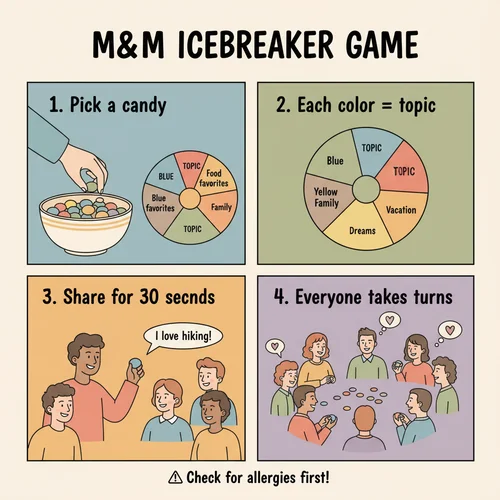
5. M&M Game
What you need: Colored candies or counters. Each color = one topic.
Topics:
- Blue: hobby | Yellow: family | Green: vacation
- Orange: favorite place | Brown: wish | Red: food
Pick a color. Talk for 30 seconds.
Time: 10-15 minutes
Allergy check: Use counters instead of candy if needed.
6. Conversation Starters
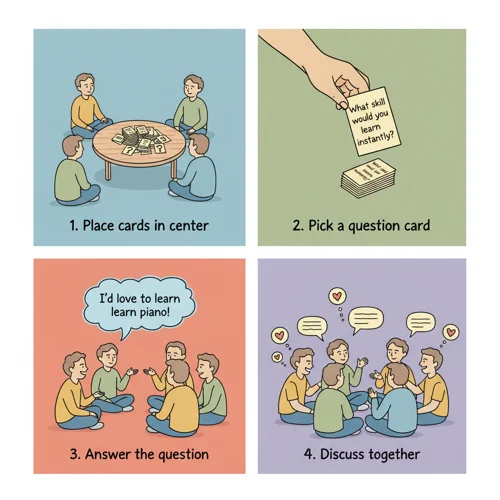
What you need: 20-50 question cards.
How to play: Groups of 3-5. Draw a card. Answer it. Others ask follow-ups. Repeat.
Sample questions:
- What are you looking forward to this year?
- What skill would you learn instantly?
- Best way to spend a weekend?
Time: 10-15 minutes
Tip: Have one group share their best answer with the class.
7. Two Truths and a Lie
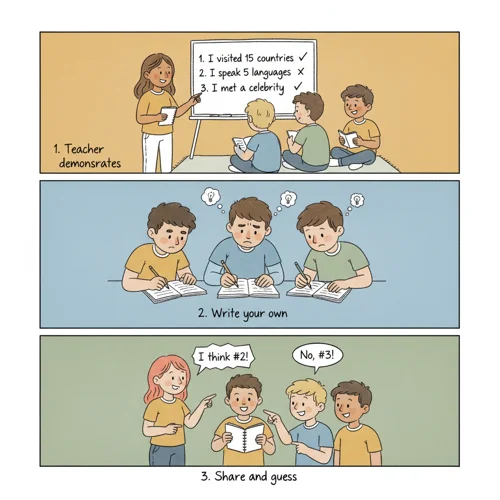
You go first. Write three facts on the board. Two true, one false. Students ask questions and guess the lie.
Then students do it in small groups.
Time: 10-15 minutes
Tip: Encourage creativity. Discourage copying your examples.
8. Mingle Game
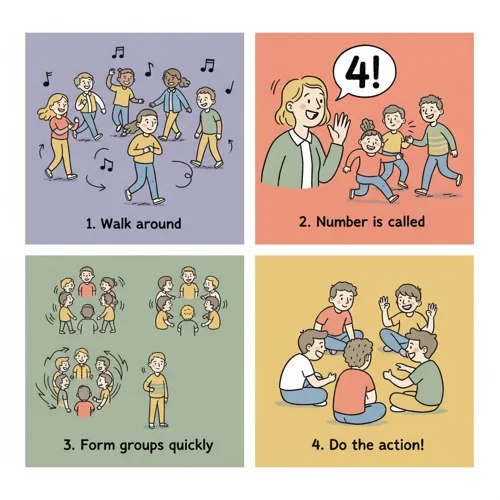
Play music. Call a number. Students form groups of that size. No group? You’re out.
Action variation:
- 1 = back to back
- 2 = toes touching
- 3 = circle
- 4 = on chairs
Time: 5-10 minutes
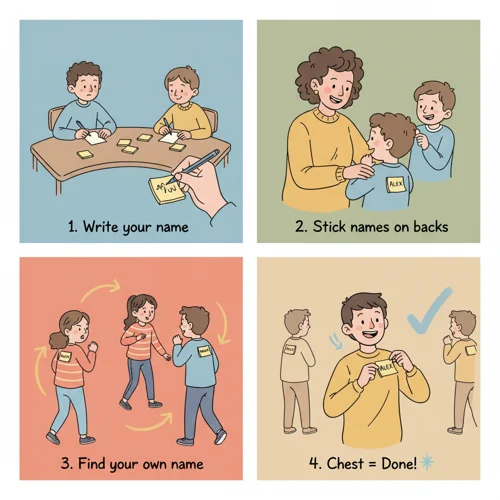
9. Name Grab
What you need: Sticky notes.
Everyone writes their name. You stick them randomly on students’ backs. Find your name on someone else’s back. Grab it. Help others find theirs.
Time: 5-10 minutes
Safety: Walk. Don’t run.
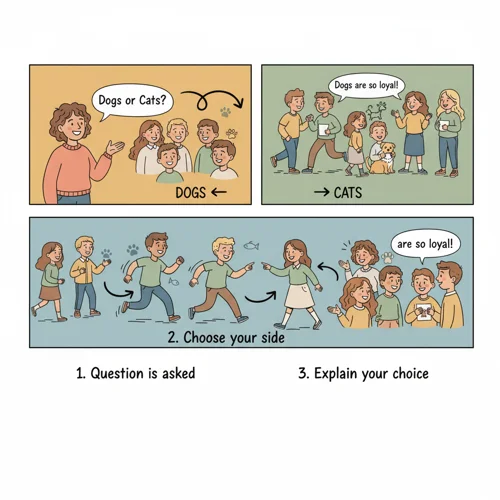
10. Either / Or
Left side = option A. Right side = option B. Ask quick questions. Students move to their choice.
Questions:
- Salty or sweet? Coffee or tea?
- Hot or cold weather? Dogs or cats?
- Chocolate or vanilla? Beach or mountains?
Time: 5-10 minutes
Why it works: Everyone moves. Visible groupings spark conversations.
Wrap Up: Ask Me Anything
End class with open Q&A. Answer openly. Ask questions back. Models conversation.
Teaching Tips
Mix activities: Start with a quick game. End with a longer one.
Go first: Show the energy level you want to see.
Switch fast: Activity not working? Move on. First impressions beat perfection.
Stay positive: Build confidence with friendly questions and encouragement.
Bottom Line
These games get students talking from minute one. Pick activities that match your class size and available time. A few minutes of icebreaking sets the tone for the entire semester.
Looking for more icebreaker ideas? Check out our other articles: