 Ice Breaker Games
 Best Icebreaker Games for Small Groups: 5 Proven Activities
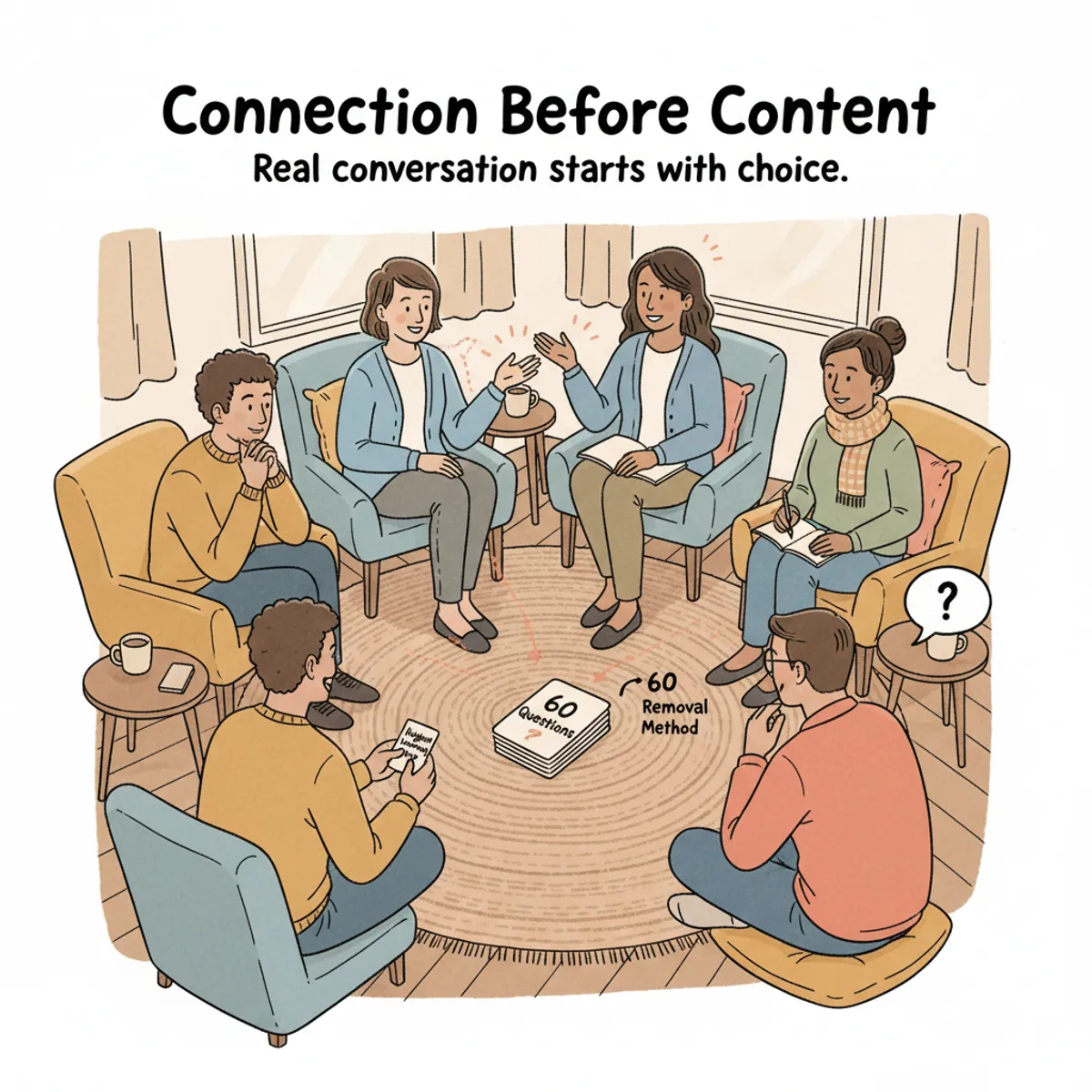
Finding effective icebreaker games for small groups can be challenging. Unlike large team building activities, small groups need conversation starters that feel authentic rather than forced. The best icebreaker games for small groups prioritize meaningful connection over gimmicks, giving participants choice and creating low-risk spaces for genuine dialogue. In this guide, you’ll discover five proven small group icebreakers that transform awkward introductions into engaging team experiences.
Why Small Groups Need Specialized Icebreaker Games
Small groups of 3-8 people face unique challenges that require different facilitation approaches than large team building activities. In intimate settings, shallow icebreaker games feel more awkward because there’s nowhere to hide. Every participant’s engagement (or lack thereof) is visible.
The most effective icebreaker games for small groups share three characteristics:
- Participant control: People choose their level of vulnerability and topic engagement
- Low-risk prompts: Questions invite sharing without forcing uncomfortable disclosure
- Meaningful depth: Activities create real connection rather than surface-level small talk
Research on group dynamics shows that small teams build trust faster when icebreaker activities focus on shared values and genuine curiosity rather than forced fun. The goal is connection before content—establishing human rapport before diving into meeting agendas or project work.
Best Types of Icebreaker Games for Small Groups
When selecting icebreaker games for small groups, consider these proven categories:
Conversation-Based Games: Question prompts that spark dialogue work exceptionally well for small teams. Unlike physical activities or complex games, conversation starters are easy to facilitate and naturally inclusive.
Choice-Driven Activities: The best small group icebreakers let participants select what they share. This autonomy increases engagement and reduces the defensive resistance that mandatory sharing often triggers.
Reflection Games: Activities that invite brief personal reflection before group sharing help introverts process and give everyone more thoughtful contributions to offer.
Two-Round Structures: Icebreaker games that involve two passes around the circle build momentum and allow people to hear others before sharing their own responses.
The five team building activities below represent these categories and have been tested successfully with small groups across different industries and contexts.
60 Removal: A Question-Based Icebreaker Game
Start with a deck of 60 curated questions laid out for the group. The exercise called 60 Removal reveals how well a group actually knows each other and gives individuals agency in the conversation. This is one of the most revealing icebreaker games for small groups.
How to Facilitate This Small Group Activity
- Lay all 60 questions face up on a table around the small group
- If the group is well established, ask them to remove every question they feel they could answer for the rest of the group. Notice how many remain
- If the group is newly forming, invite each person to select two or three questions they are genuinely curious about and ask those
Observation worth noting: In one long-standing team of six people, they removed only three questions from the 60. That’s a powerful indicator that even teams who work together for years often have a lot more to learn about each other.
Why this icebreaker game works: The group decides the topics, not the facilitator. That choice makes the conversation relevant and engaging. People are more present when they opt in.
Time required: 15-25 minutes depending on group size Best for: 4-8 people Difficulty level: Low risk, adaptable depth
Variations for Different Small Group Needs
- Speed version: Use only 30 questions and 10 minutes
- Virtual adaptation: Share questions in a shared document and use polling to select top choices
- Deep dive: After initial sharing, invite follow-up questions on the most interesting responses
Give Your Small Group Control Over Conversation Topics
Facilitation is not about controlling the agenda. The most effective icebreaker games for small groups create the conditions that let participants decide what matters. Use the 60 Removal method or question packs to hand control to your team.
Challenge by choice — offer options and let people pick their level of vulnerability. That simple shift leads to richer, more authentic interactions in small group activities.
This principle applies beyond icebreaker games. When teams feel ownership over meeting conversations, engagement naturally increases.
Change Talk vs Sustain Talk: Deep Icebreaker for Small Teams
Borrowing from motivational interviewing, introduce the distinction between change talk and sustain talk as a discussion prompt. This is a slightly deeper small group icebreaker that creates low-risk reflection about how the group communicates.
- Change talk: Language about trying something new or moving toward a different behavior — the beginnings of a plan
- Sustain talk: Language that keeps current habits and narratives in place — complaints and justifications
Prompt idea: Invite the group into a five to ten minute conversation about what sustain talk and change talk look like in your team. Does your group lean toward action or stagnation?
Why this team building activity works: It addresses real team dynamics through an accessible framework. The concepts are easy to grasp but lead to surprisingly insightful discussions about how your small group actually operates.
Time required: 10-15 minutes Best for: Established teams of 3-6 people Difficulty level: Medium depth, low risk
Problems and Possibilities: A Two-Round Team Building Game
Try this two-step exercise to move from concern to constructive imagination. It helps people connect now and follow up later. This is one of the most energizing icebreaker games for small groups because it balances realism with optimism.
How to Run This Small Group Activity
Round one: Ask everyone to share a problem they truly care about solving.
Round two: Go around again and share a possibility that could emerge if change happened.
Example: Someone might name social media overconsumption as a problem — its isolating effects and impact on mental health. The possibility they imagine could be increased public education, warning labels similar to tobacco, or cultural shifts that encourage more in-person time.
Why This Icebreaker Game Matters
The problem round surfaces what people care about beyond work tasks. The possibility round creates a positive, energizing vision. Together they form a natural hook for check-ins and follow-up between sessions.
“I am so sick of talking about problems. Talk to me about possibility.”
This line captures the power of asking not just what is wrong, but what could be different. It transforms a typical icebreaker into a conversation that matters.
Time required: 15-20 minutes Best for: 4-8 people Difficulty level: Medium risk, high value
Facilitator tip: Go first to model the appropriate level of sharing. Choose a genuine problem you care about but keep it brief (one to two minutes maximum).
The “To Be List”: Quick Icebreaker Activity Before Meetings
Before diving into the agenda, replace part of the opening with a brief “to be list.” Instead of listing tasks, ask each person how they want to be in the meeting. This is the fastest of all small group icebreakers and sets a powerful tone.
Examples: curious, action-oriented, playful, focused, generous.
Give two minutes for everyone to share their desired state.
Why this activity works: Setting states out loud increases the likelihood people will inhabit them. It is a small habit with big payoff for attention, engagement, and the meeting tone.
Time required: 2-5 minutes Best for: Any small group size Difficulty level: Very low risk
Variation: For ongoing teams, track “to be” commitments and check in at meeting close to see if people felt they achieved their intended state.
Common Mistakes When Running Small Group Icebreakers
Even the best icebreaker games for small groups fail when facilitators make these errors:
Forcing participation: Mandatory sharing creates resistance. Always offer opt-out options or alternative ways to participate.
Choosing inappropriate depth: New teams need lighter conversation starters. Established groups can handle deeper team building activities. Match the icebreaker game to the relationship stage.
Skipping setup time: Brief context about why you’re using an icebreaker increases buy-in. Don’t just launch into questions.
Rushing the activity: Small groups can handle more spacious timing. Let silence happen. Not every pause needs filling.
Ignoring follow-up: The best small group activities create conversation hooks for future check-ins. Capture key insights and reference them later.
One-size-fits-all approach: Different small group icebreakers serve different purposes. Match the activity to your meeting goals.
Three Quick Facilitation Tips for Small Group Activities
- Assume the social risk: Offer the first vulnerable prompt so others feel safe following. Model the engagement level you want to see.
- Keep it timeboxed: Short, intentional prompts (two to ten minutes) maximize participation and energy. Even powerful icebreaker games lose impact when they drag.
- Use the conversation for follow-up: Capture the problems and possibilities people name so you can check in later and build ongoing connection.
Frequently Asked Questions About Icebreaker Games for Small Groups
How long should icebreaker games for small groups last?
For small teams of 3-8 people, effective icebreaker activities typically run 5-15 minutes. Longer facilitation (up to 25 minutes) works when the icebreaker directly connects to meeting objectives. The key is matching duration to group needs—new teams often need more time to warm up.
What makes icebreaker games work better for small groups than large ones?
Small group icebreakers succeed when they leverage intimacy rather than fighting it. Unlike large team building activities that use energy and movement, the best small group activities focus on meaningful conversation and individual choice. With fewer people, every contribution carries more weight, so low-risk prompts that invite genuine sharing work best.
Can these icebreaker games work for remote small groups?
Yes. All five small group activities in this guide adapt well to virtual meetings. The 60 Removal exercise works with shared documents, Problems and Possibilities translates directly to video calls, and the “To Be List” actually feels more natural remotely than many physical icebreaker games. The key is using chat, polls, and breakout rooms strategically.
How do I choose the right icebreaker game for my small group?
Consider three factors: relationship stage, meeting purpose, and time available. New teams benefit from lower-risk conversation starters like the “To Be List.” Established groups can handle deeper activities like Change Talk vs Sustain Talk. If your meeting addresses challenges, Problems and Possibilities creates natural alignment. Match the icebreaker to context.
What if someone doesn’t want to participate in the icebreaker activity?
The best small group icebreakers build in choice. Phrases like “share if you’re comfortable” or “pass is always an option” reduce pressure. Some people engage better as listeners. Forcing participation undermines the trust these team building activities aim to build.
Closing Thought
Great icebreaker games for small groups are not gimmicks. They are intentional moves that create choice, reduce risk, and invite people into conversations that matter. Whether you use a curated deck of questions, a two-round problems and possibilities prompt, or a simple to be list, prioritize connection before content.
The result is meetings that feel human and productive, and groups that grow closer over time. These small group activities work because they respect participants’ autonomy while creating structure for meaningful dialogue.
When you shift from forced fun to genuine facilitation, your team building activities transform from dreaded obligations into opportunities for real connection. Start with one of these five icebreaker games for small groups and notice how the quality of conversation changes.
Looking for more facilitation techniques? Check out our other articles: